


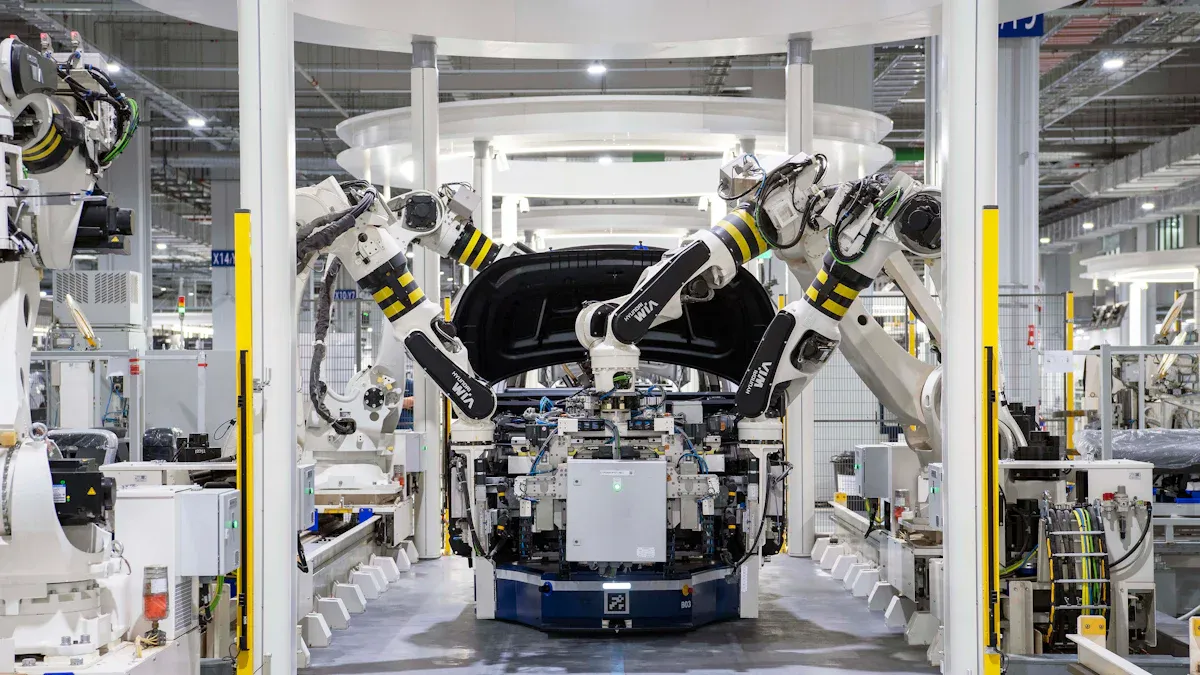
You notice car makers change how they make cars each year. Many now use injection molding to make plastic parts, not metal ones. This change makes cars lighter. Lighter cars use less fuel and stay safe and strong. Using plastic parts helps the planet and saves money. Making custom plastic parts lets you design new shapes and features. Injection molding helps these changes happen. It also makes building cars faster and easier.
Key Takeaways
- Injection molding makes car parts lighter. This helps cars use less gas. It also helps the environment.
- The process lets companies make many parts fast. This saves time and money for car makers.
- Using different plastics in injection molding makes strong parts. It also lets them make shapes that fit well in cars.
- Automation in injection molding keeps the quality the same. It also cuts down on waste. This makes making cars easier.
- New technologies in injection molding help a lot. Electric machines and smart manufacturing make car building faster. They also help the planet.
Injection Molding in Automotive Manufacturing
Process Overview
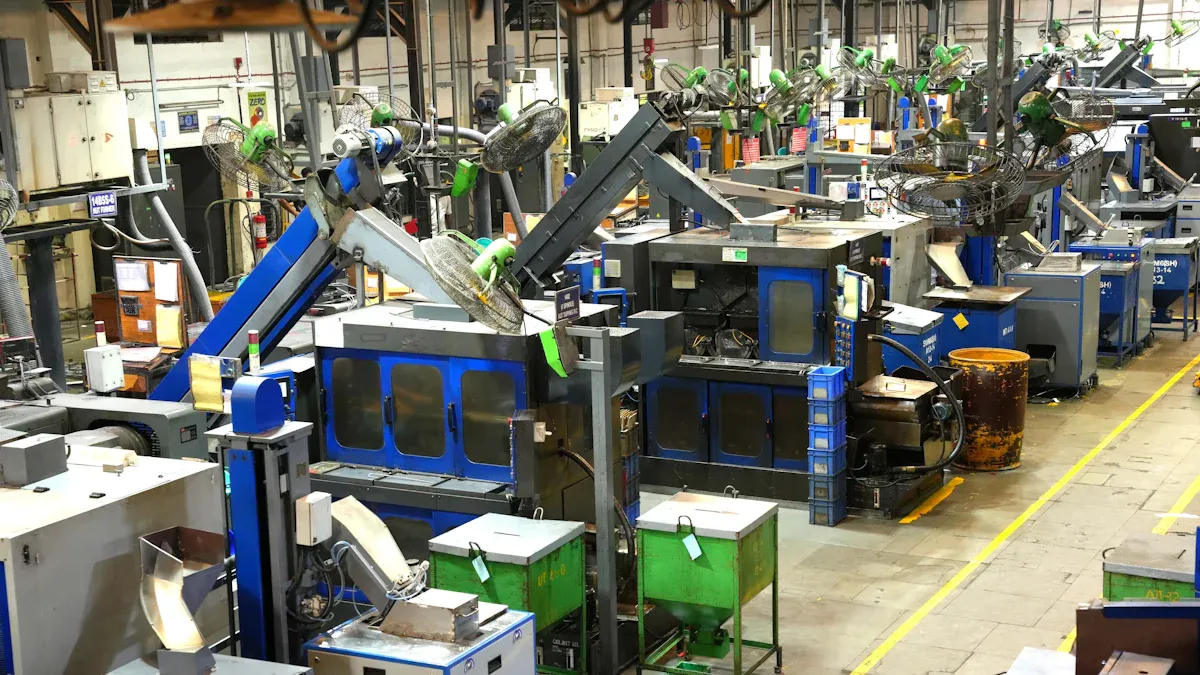
You can see how injection molding shapes the way car parts are made. The process starts with tool design. You create a mold that matches the part you want. Next, you build the mold and test it with samples. After you check the quality, you begin the main injection molding process. Here are the main steps you follow:
- Prepare the mold and get it ready for heated materials.
- Inject the heated plastic into the mold.
- Let the part cool down inside the mold.
- Eject the finished piece.
- Get the machine ready for the next cycle.
This method lets you make many parts quickly and with the same quality every time. You can use different types of plastic to match the needs of each car part. Injection molding helps you create strong, lightweight, and complex shapes that fit tight spaces in cars.
Applications in EVs, PHEVs, and ICE Vehicles
You find injection molding used in all types of vehicles—electric (EVs), plug-in hybrids (PHEVs), and traditional gas-powered (ICE) cars. This process works well for both mass production and prototyping. You can make thousands of parts for one car model, or just a few samples to test a new design.
Here are some common car parts made with this method:
- Grills
- Bumpers
- Headlights
- Fenders
- Side mirrors
- Splash guards
- Door handles
- Center consoles
- Dashboards
- Oil pans
- Covers
- Gaskets
- Fluid tanks
You see a big shift from metal to plastic parts in modern cars. Plastic parts weigh less, which helps cars use less fuel or battery power. Lighter cars also meet new rules for energy use and safety. Injection molding lets you design parts that are both strong and light, making cars better for drivers and the planet.
Tip: Using injection molding, you can test new ideas quickly and move from prototype to full production without changing the process.
Benefit of Injection Molding in Automotive Manufacturing Description High repeatability Each part comes out the same, every time. Cost efficiency You save money by making many parts at once. Lightweight parts Plastic parts reduce the weight of the car. Complex shapes You can design parts with special features.
Efficiency Benefits for Automakers
High-Speed Production
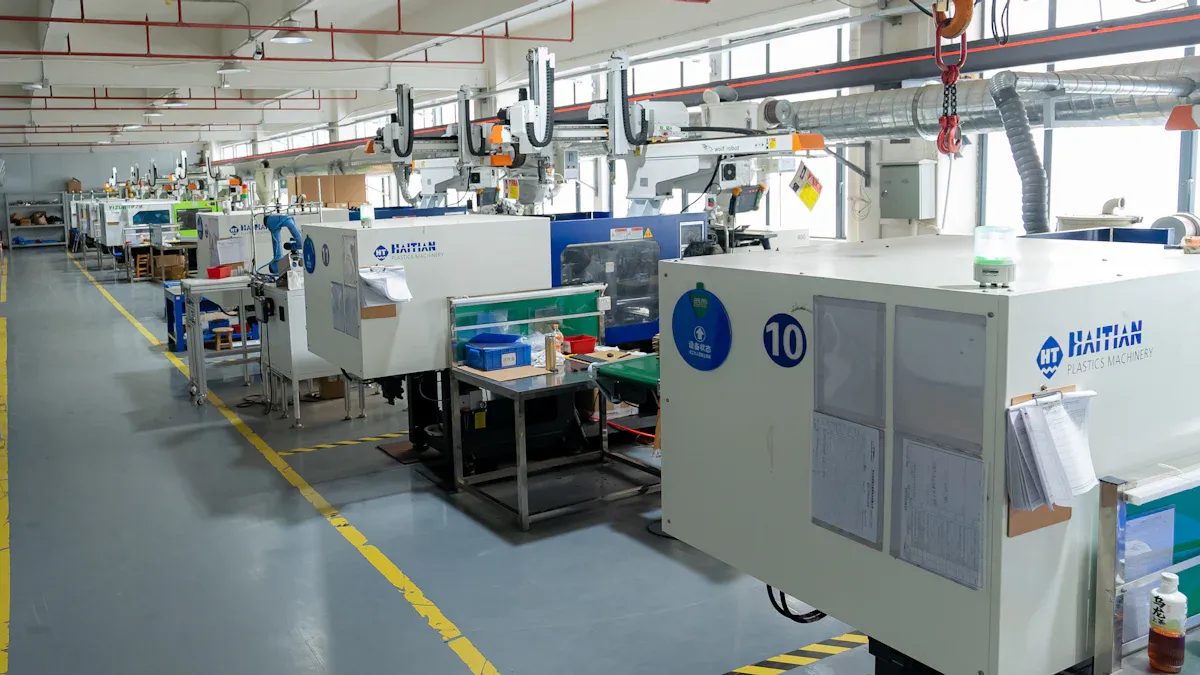
Automakers need to build cars fast to meet goals. Injection molding helps make many parts quickly. You can check designs fast and fix problems early. High-precision molds mean fewer mistakes. This saves time and keeps the line moving.
- Injection molding lets you make lots of car parts fast.
- Quick checks help you spot problems before they slow you down.
- Accurate molds mean fewer bad parts and faster work.
Injection molding is one of the fastest ways to make plastic car parts. After you have a mold, you can make parts quickly. The process includes closing the mold, adding plastic, cooling, and taking out the part. This speed helps you keep up with car building needs.
Material Versatility and Lightweighting
You can pick from many plastics when using injection molding. Each plastic has special traits that help make better car parts. Some are strong and light. Others can handle heat or chemicals. This lets you choose the best plastic for each part.
| Material | Properties | Contribution to Lightweighting |
|---|---|---|
| Polypropylene | Low weight, resists water and chemicals, safe, handles heat | Good for outside parts, helps cars use less fuel |
| ABS | Light, tough, handles hits, easy to shape | Great for dashboards, helps cars work better |
| Polyamide/Nylon | Strong, light, resists wear and rust | Handles tough jobs, helps cars last and weigh less |
Polypropylene is used for fenders and bumpers. ABS is good for dashboards and doors. Polyamide or nylon works under the hood because it handles heat and chemicals. Using these plastics makes cars lighter. Lighter cars use less fuel or battery power. This helps the planet and saves money.
Design Flexibility
Automakers want car parts that look nice and work well. Injection molding lets you make parts with cool shapes and details. You can add colors and textures right away. This saves time because you do not need extra steps.
- You can pick plastics for strength, toughness, and heat resistance.
- You can add features like bending and less noise.
- You can make parts with small details and tight fits.
- You can build tricky inside parts that make cars better.
| Feature | Description |
|---|---|
| Design freedom | You can make test parts with any shape using new molding tricks. |
| Virtual iteration | You can try and change designs on a computer before making real parts. |
| On-demand production | You can go from design to making parts fast, so you get them when needed. |
| Versatility | You can pick from many plastics and change parts for special jobs. |
Micro molding helps you make tiny, detailed parts that still work well. This lets you add new features that make your cars stand out.
Cost Reduction and Waste Minimization
Automakers want to save money and use less stuff. Injection molding helps lower costs in many ways. You can cut costs by up to 30% compared to old ways. Making lots of parts at once saves money. Machines and smart planning mean less work and less waste.
- You make lighter parts, which saves fuel and money.
- You use plastics that can be recycled, so you make less trash.
- Good molds mean fewer mistakes, so you throw away less.
- Machines help you use plastics wisely and change things to waste less.
Using injection molding helps the planet by making less trash and using plastics like PET, PP, and HDPE that can be recycled.
Automation and Consistency
Automakers want every part to be the same and work well. Automation in injection molding makes this happen. Machines control the process, so each part is just right. Robots move parts gently, which keeps them safe.
| Benefit | Description |
|---|---|
| Precision | Machines make sure every part is the right size. |
| Error Reduction | Machines make fewer mistakes, so parts are better. |
| Repeatability | Every part is the same, which is important for safety. |
| Uniform Material Addition | Machines add the right amount of plastic every time. |
| Careful Handling | Robots move parts gently, so nothing breaks. |
Automation also means you need fewer workers to watch the machines. Big car companies use automation to make cars faster and cheaper. Some companies make cars 30% faster with automation. Machines can run all day and night, so production is steady.
Tip: Automation in injection molding helps you make good parts every time, saves money, and keeps your line working well.
Injection Molding vs. Traditional Methods
Production Speed Comparison
You want car parts made quickly. Injection molding makes many parts at once. Stamping also makes lots of parts fast, but costs more at first. Machining is slower because it makes one part each time. Multi-cavity molds help lower the cost for each part. This means you finish jobs faster and keep your work moving.
| Process | Production Speed | Cost Considerations |
|---|---|---|
| Injection Molding | Fast for high-volume | Higher initial tooling costs, lower per-part costs with volume |
| Stamping | Efficient for high-volume | Higher initial tooling costs, but efficient for large runs |
| Machining | Slower, one part at a time | Precise but less efficient for large batches |
Injection molding lets you make more parts in less time. Stamping works well for big jobs, but machining is slow and best for special parts.
Cost and Resource Efficiency
You save money by using injection molding for car parts. Automation helps you use less material and waste less. Machines work with little help, so you spend less on workers. You save more over time because the process is better. When you switch from old ways, you see shorter times and better use of materials.
| Evidence of Resource Efficiency Improvements | Description |
|---|---|
| Enhanced Efficiency | Automation improves every step of injection molding, making it more efficient. |
| Reduced Cycle Times | Machines run all the time with little help, so cycle times are shorter. |
| Minimized Material Waste | Automated systems cut costs by using less material. |
| Cost Savings | You save money over time with better processes and fewer workers. |
| High-Volume Production | Automation helps make lots of parts that are all the same. |
Using injection molding means less waste and more savings as time goes on.
Quality and Performance
You want every car part to work well and look nice. Injection molding makes sure each part is the same as the last. Machines add the right amount of material every time. You get strong, light parts that fit small spaces. Stamping and machining can make exact parts, but they are not as fast or steady as injection molding for big jobs.
Tip: If you pick injection molding, you get good parts with less waste and lower costs. This helps you build better cars faster.
Innovations and Future Trends
Electric Injection Molding Machines
Car makers now use electric injection molding machines. These machines use less energy than old hydraulic ones. Some new machines use 30–70% less power. This saves money and helps the planet. The machines only use energy when working. This means less waste. Some machines recycle energy from their motors. This helps car makers meet green goals in Europe and North America.
- Engel made new all-electric presses in 2023. They use 20% less energy than older models.
- Fanuc added smart features to its ROBOSHOT line in 2024. These include AI for fixing problems and better robot teamwork.
You get more control with these machines. You make fewer mistakes. This means better parts and less wasted plastic.
Sustainable and Composite Materials
Car makers now use greener materials in injection molding. They use compostable bioplastics from plants like cornstarch and sugarcane. These break down after use. More recycled plastics come from old products and factory waste. This keeps trash out of landfills.
- Compostable bioplastics break down after you use them.
- Post-consumer recycled plastics come from used things.
- Post-industrial recycled resins come from factory scraps.
Composite materials like carbon fiber make cars lighter. Lighter cars need smaller engines. This means less pollution. Some recycled plastics, like PET fibers, work well in car parts.
Note: Using these materials helps lower your carbon footprint. It also helps you follow new clean car rules.
Smart Manufacturing Integration
New technology makes car parts smarter. Smart manufacturing uses sensors and computers to watch the process. This helps you find problems early and fix them fast. AI and smart controllers let you change settings quickly. This keeps quality high and cuts waste.
- Real-time monitoring checks mold temperature and pressure.
- AI predicts problems and fixes machines before mistakes happen.
- Machine learning helps you make more good parts with less waste.
IoT gives you more control. You always see what is happening inside the machine. You can act fast if something goes wrong.
Customization and On-Demand Production
You can now make custom car parts fast with injection molding. On-demand production lets you make parts when you need them. This cuts storage costs and speeds up delivery. You can make complex shapes that are hard with other methods.
- Fast production cycles mean you wait less time.
- Less waste saves money on big orders.
- You can design tricky parts for special cars.
Big car companies work with partners to make supply chains faster and more flexible. Electric car makers use on-demand production to get new models out fast.
Tip: On-demand production helps you react to market changes and customer needs right away.
You can make car parts faster with injection molding. It helps save money and lets you try new designs. Automakers use it to build cars that are lighter and stronger. You get good quality parts and throw away less material. In the future, you will see more accurate work, new plastics, and bigger markets. Here is what might happen:
| Trend Description | Implications |
|---|---|
| Precision and Miniaturization | Ceramic molding makes tiny electronic car parts |
| Industry Consolidation | Bigger companies use better technology |
| Sustainable Development | New rules help recycling and green production |
| Market Growth | The market could reach $25.8 billion by 2033 |
Injection molding will keep changing how cars are made and help with new problems.
FAQ
What is injection molding?
You use injection molding to make car parts from plastic. You heat plastic pellets, inject them into a mold, and cool them. This process shapes the part. You get strong, light, and detailed parts quickly.
Why do automakers prefer plastic over metal?
You choose plastic because it weighs less than metal. Lighter cars use less fuel or battery power. Plastic also lets you create complex shapes and new designs. You save money and help the environment.
Can you recycle injection-molded car parts?
Yes, you can recycle many plastic car parts. You collect, clean, and melt them to make new products. Using recycled plastics helps you reduce waste and protect the planet.
How does injection molding help with custom car parts?
You can make custom parts fast with injection molding. You design a mold for your part, then produce it quickly. This helps you test new ideas and meet special needs.
