


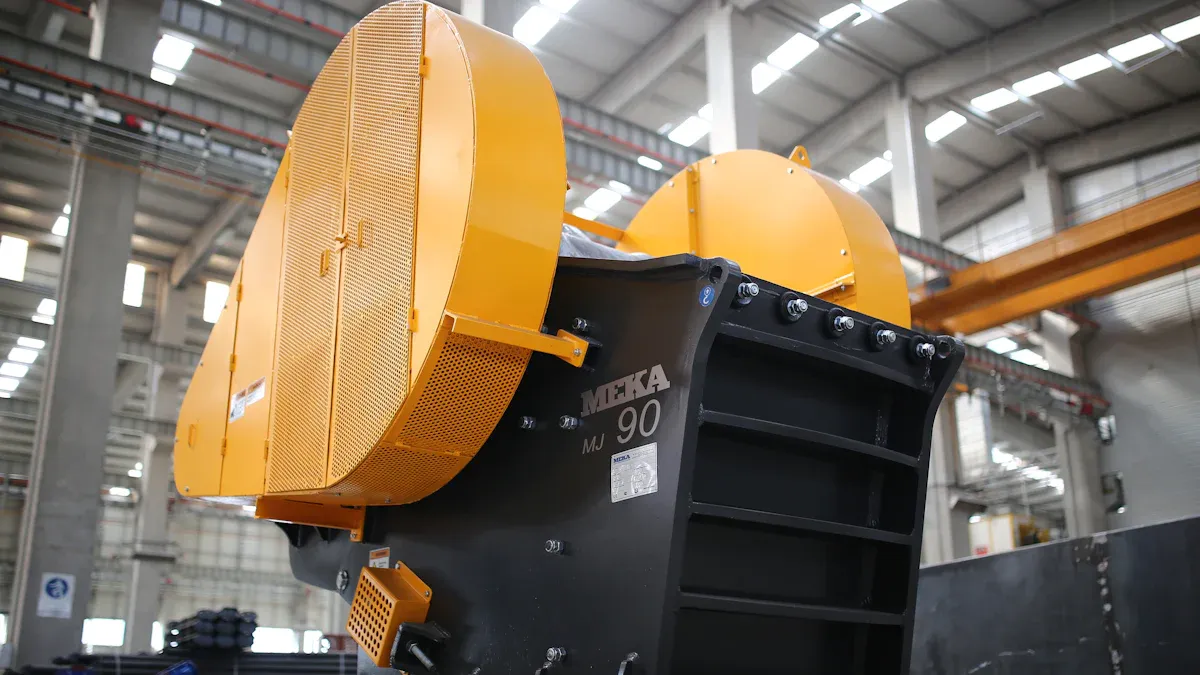
You might ask if PTFE can be injection molded. The answer is no. PTFE does not work with normal injection molding. PTFE has special features that make it hard to shape.
- PTFE does not stretch or return to its shape, so it bends or changes shape easily in many uses.
- It melts very slowly and is sensitive to heat, so it is hard to machine and process.
- PTFE does not stick to glue or weld well, so you need special ways to put parts together.
- You must control the temperature closely and pick the right tools when working with PTFE.
If you use PTFE, you need to know these problems. This helps you pick the best way to work with it and avoid expensive errors.
Key Takeaways
- PTFE cannot be shaped with normal injection molding. This is because it does not melt into a liquid. It also has very high melt viscosity.
- Special methods are needed to make strong PTFE parts. These methods include cold compression and sintering.
- PTFE has a special chemical structure. This gives it great heat, chemical, and electrical resistance. That makes it useful in many industries.
- The right tools must be used during molding. Pressure and temperature must be controlled carefully. This helps stop defects and makes sure parts are good quality.
- PTFE parts help fix hard problems in many fields. These fields include food processing, aerospace, medical devices, and chemical handling.
Can PTFE Be Injection Molded?
Direct Answer
You cannot use normal injection molding for PTFE. PTFE acts differently than most plastics. When you heat PTFE, it does not turn into a liquid. It stays thick and sticky. This makes it hard to push into a mold with regular machines. You need special ways to shape PTFE. Most companies use cold compression and sintering. These ways help make PTFE into strong parts.
Tip: Always remember, PTFE needs special tools and steps. You cannot use the same things you use for other plastics.
Industry Relevance
Many industries use PTFE because it solves hard problems. PTFE can handle heat, chemicals, and electricity. This makes it good for engineers and makers who need strong materials. You can change PTFE sheets by size, thickness, or by adding things. This lets you make parts for special jobs like seals, bearings, and insulation.
Here is a table that shows how different industries use PTFE and what they need from it:
| Industry | Specific PTFE Needs and Applications |
| Material Handling | Belts, bearings, gaskets, seals, guide rails for courier, postal, airports, distribution centers. |
| Food & Beverage | High temperature parts for food processing, safe for food contact, no harmful substance release. |
| Chemical Processing | Gaskets, tank linings, washers, pump parts, sealant tapes, filters, seals, tubes, pipes, bushings; handles acids and caustic fluids. |
| Construction | Sheets for bridge pads, expansion joints, water-repellent surfaces, hydraulic system parts. |
| Oil and Gas | Seals, gaskets, linings, pump housings, pipelines, bearing pads for offshore platforms and wells. |
| Electrical & Electronics | Wire insulation, terminals, PCBs, capacitors, seals, gaskets, o-rings, semiconductor parts, batteries. |
| Aerospace & Defense | Insulation, PCBs, seals, gaskets, bushings, o-rings; high temperature and dielectric properties. |
| Energy | Solar modules, fuel cells, batteries, heat exchangers. |
| Automotive | Engine parts, exteriors, shaft seals, valve seals, gaskets, fuel hose lining; light weight and durable. |
| Medical | Grafts, heart patches, ligament replacements, sutures, catheters, forceps, testing tools; FDA compliant. |
| Semiconductor | Used in semiconductor fabrication processes and components. |
You can see PTFE is used for many things. It helps with chemicals and keeps food safe. Its special features, like not breaking down with heat or chemicals, help in tough places. As technology gets better, PTFE also gets better. This makes it even more helpful for new engineering needs.
PTFE Properties

Chemical Structure
PTFE is like a chain made of carbon and fluorine. Each part of the chain is –CF₂–CF₂–. Every carbon atom connects to two fluorine atoms. The chain has a strong backbone. Fluorine covers the whole chain. This makes PTFE very stable. Chemicals cannot break it down easily. The carbon-fluorine bonds are very strong. PTFE can handle heat and electricity well.
Let’s look at how PTFE compares to other fluoropolymers:
| Property | PTFE (Polytetrafluoroethylene) | PVDF (Polyvinylidene fluoride) | FEP/PFA (Copolymers) |
| Molecular Structure | Fully fluorinated, –[CF₂–CF₂]ₙ– | Partially fluorinated, –[CH₂–CF₂]ₙ– | Copolymers with side chains |
| Chemical Resistance | Exceptional | Excellent, but less than PTFE | Similar to PTFE |
| Thermal Stability | High (melting ~327°C) | Lower (melting ~177°C) | High (melting ~260–305°C) |
| Processability | Needs sintering/compression | Melt-processable | Melt-processable |
Note: PTFE’s full fluorine cover makes it stronger against chemicals and heat than PVDF or FEP.
Processing Behavior
PTFE acts different from most plastics when you try to shape it. PTFE does not melt into a liquid. It turns thick and gel-like when hot. The long chains in PTFE get tangled. They do not flow well. PTFE has a very high melt viscosity—about 10¹⁰ Pa.s at 360°C. Most plastics for injection molding have much lower viscosity. They flow like syrup when hot. PTFE’s high viscosity means you cannot use normal injection molding machines.
- PTFE is a semi-crystalline polymer. It has hard, ordered parts and soft, mixed-up parts.
- The polymer can change its crystal shape at different temperatures. These changes make PTFE feel more tough or flexible.
- The strong carbon-fluorine bonds help PTFE keep its shape even when hot.
- You need special tools and steps, like cold compression and sintering, to shape PTFE.
Tip: Never try to shape pure PTFE with regular molding machines. You could break your equipment and waste material.
PTFE Molding Challenges
High Melt Viscosity
When you try to mold PTFE, you face a big challenge: its melt viscosity. At processing temperatures near 380°C, PTFE has a melt viscosity around 10 GPa·s. This value is much higher than what you see in most plastics. Even when PTFE melts, it does not flow like syrup. Instead, it stays thick and sticky. The viscosity can range from 10⁹ to 10¹² Pa·s, which means PTFE cannot move easily inside a mold.
This high viscosity makes it almost impossible for PTFE to fill molds using regular methods. The material does not spread out or reach small spaces in the mold. You might notice that PTFE does not act like other plastics during molding. It needs special techniques to shape it into useful parts.
Note: High melt viscosity stops PTFE from flowing and filling molds. You must use other ways to shape it, such as cold pressing or sintering.
Why Conventional Methods Fail
You cannot use normal injection molding for PTFE. The reasons are clear and well-documented:
- PTFE needs very high melt temperatures, sometimes up to 800°F. You need special machines and careful temperature control to avoid breaking down the polymer.
- The high melt viscosity causes slow flow. PTFE may not fill sharp corners or small gates in the mold. You risk melt fracture if you force it.
- PTFE reacts to high stress during molding. Its viscosity can change quickly, making the process hard to control.
- When PTFE melts, it can release fluorine gas. This gas can damage equipment and is unsafe to breathe.
- Regular extrusion and molding methods do not work for PTFE. The polymer’s high molecular weight and melting point stop it from flowing, even when hot.
Because of these problems, you must use special processes. For example, you can mix PTFE powder with a lubricant and press it into shape. Then, you heat it to make it strong. These steps help you avoid the limits of regular molding.
If you try to use standard methods, you will not get good results. PTFE’s unique properties require you to use alternative molding techniques.
PTFE Molding Process
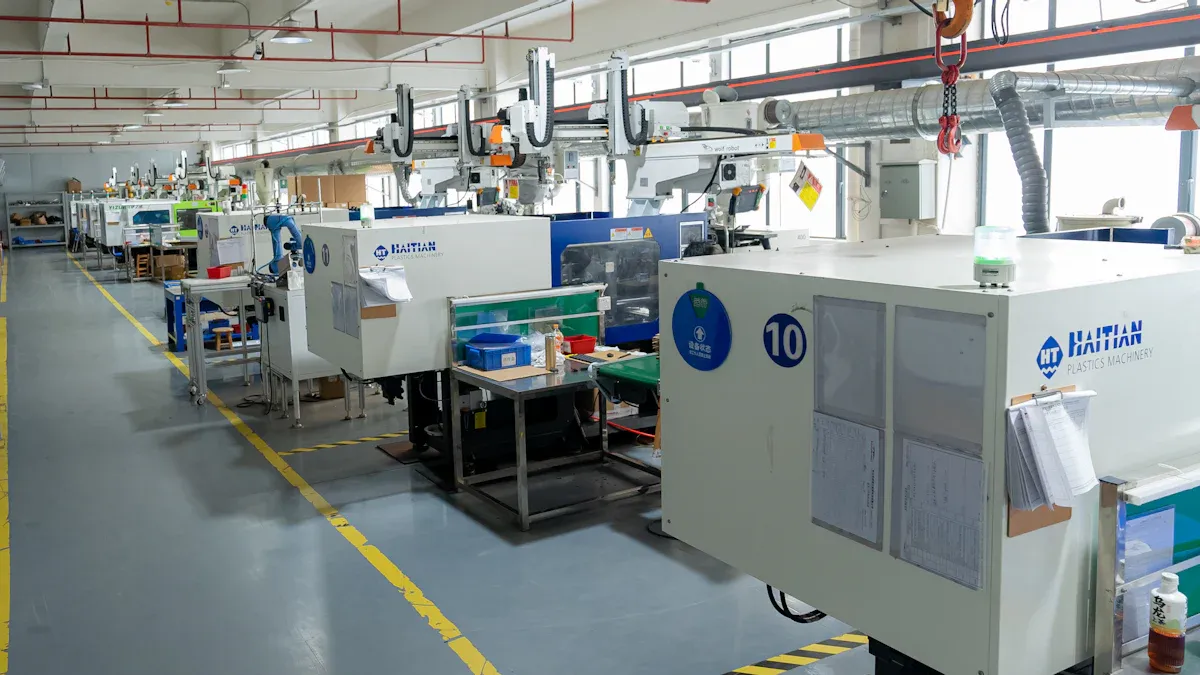
Cold Compression
The PTFE molding process starts with cold compression. This step happens at room temperature, about 25°C. You put PTFE powder into a clean mold. Spread the powder out so it is even. Use a scoop to add powder slowly. This helps stop lumps and cracks from forming. After the powder is in, you press it down hard. The pressure can be between 10 and 100 MPa. You do not heat the powder during this part. The pressure shapes the powder to fit the mold.
Here is an easy guide for cold compression:
- Store PTFE powder at 23°C-27°C and keep humidity under 50%. This keeps the powder dry and stops lumps.
- Clean the mold and your work area. PTFE powder can pick up dust and lint.
- Use a clean scoop to put powder in the mold evenly.
- Press the powder with high pressure (10-100 MPa) at room temperature.
- Take the shaped part out of the mold carefully. The part is weak before sintering.
Tip: Wear clean, lint-free clothes when working with PTFE powder. The powder can get dirty fast, which can hurt the part’s quality.
Sintering
After cold compression, you need to sinter the PTFE part. Sintering means heating the pressed powder until the pieces stick together. Put the part in a special oven. The oven heats up slowly to almost the melting point, between 360°C and 380°C. Hold the part at this heat for a set time. This lets the PTFE pieces join and become strong.
Sintering has three main steps:
- Warm-up: Heat the part slowly so it does not crack.
- Holding: Keep the heat steady near the melting point. This helps the PTFE change and bond well.
- Cooling: Lower the heat slowly. Slow cooling stops warping and keeps the shape.
How you control the heat during sintering changes how hard and strong the PTFE part is. If you heat or cool too fast, the part can break or get weak. Studies show the right sintering steps make the part last longer and stay strong.
| Sintering Factor | Effect on PTFE Properties |
| Sintering Temperature | Controls crystallinity and mechanical strength |
| Holding Time | Affects particle bonding and phase transitions |
| Cooling Rate | Influences hardness, wear resistance, and dimensional stability |
Note: Always use a special oven for sintering. Watch the heat closely to stop mistakes and get the best results.
Equipment Needed
You need special tools for PTFE cold compression and sintering. A hydraulic press gives the force to shape the powder. Use a single-axis press for simple parts. Use an isostatic press for even pressure. The press must reach 3000 to 4500 psi.
For sintering, you need an oven that heats up to 370°C. The oven must heat evenly and let you control the heat well. After sintering, you might need lathes or grinders to finish the part and take off extra material.
Here is a table of the main tools you will use:
| Process Step | Equipment Needed | Purpose |
| Cold Compression | Hydraulic compression press | Compacts PTFE powder into solid shapes |
| Sintering | High-temperature oven | Heats and bonds PTFE particles |
| Cooling | Controlled cooling chamber | Prevents warping and keeps shape |
| Finishing | Lathes, grinders | Smooths and sizes the final part |
| Quality Control | Calipers, micrometers | Checks dimensions and quality |
Tip: Keep your powder area clean and away from other work. Use filtered air and positive pressure to keep dust out.
Alternatives and Applications
Other Molding Methods
There are many ways to shape fluoropolymer materials besides cold compression. Each way gives different results. Look at this table to see how some molding methods compare:
| Molding Method | Description | Comparison to Cold Compression Molding |
| Injection Molding | Melted polymer is pushed into a closed mold fast. It uses high pressure and gives good control. | It makes parts more exact, faster, and wastes less material than compression molding. |
| Extrusion Molding | Hot polymer is pushed through a die to make long shapes. | It is good for making long, even shapes but not for tricky designs. |
| Blow Molding | A hot preform is blown up inside a mold to make hollow things. | It makes light, thin parts but is not used much for PTFE. |
| Thermoforming | A plastic sheet is heated and shaped over a mold with air or vacuum. | It works for thin, simple shapes but is not great for PTFE. |
| Rotational Molding | Heated powder spins in a mold to make big hollow parts. | It is used for big, seamless items but not often for PTFE. |
| 3D Printing | Parts are built layer by layer for tricky shapes. | It lets you make special shapes but is slower than molding. |
You can also use ram extrusion and paste extrusion. Ram extrusion is good for strong parts with tricky shapes, like valve seats or bushings. Paste extrusion is used to make long, bendy tubes with thin walls. Each way has good and bad points. Ram extrusion makes strong parts but takes more time and costs more. Paste extrusion makes flexible tubes but they are not as strong.
Tip: You can mix in fillers like graphite or carbon fiber. These make the part stronger and last longer. Fillers help you get better results than using just the pure material.
Common Uses
Molded fluoropolymer parts are used in many industries. They work well where you need to fight chemicals, have low friction, or handle heat. Here are some common uses:
- Chemical processing: linings that do not rust, valves, and pump parts
- Fluid transport: tubes, pipes, and cable covers
- Aerospace and medical: seals, implants, and catheters
- Electronics: connectors and insulation pieces
- Food processing: non-stick pans and safe surfaces for food
- Industrial equipment: seals, gaskets, and sliding parts
This table shows why these parts are good for tough jobs:
| Performance Requirement | Application Impact |
| Chemical Resistance | Keeps seals and gaskets safe when used with harsh chemicals. |
| Temperature Resistance | Works well in places that are very hot or cold. |
| Low Friction Coefficient | Helps moving parts last longer by reducing wear. |
| Wear and Fatigue Resistance | Makes parts last longer even when used a lot. |
| Non-stick (Anti-adhesion) | Makes cleaning easy and helps seals keep working. |
| Electrical Insulation | Stops moisture and dust from hurting electrical parts. |
You can use these parts in reactors, pipes, food machines, and airplanes. Their special features help fix problems in many different areas.
PTFE molding is tricky and needs special skills. You cannot use normal injection molding for PTFE. PTFE has high melt viscosity, so you need compression molding. This uses strong pressure and careful sintering.
- You have to use hydraulic presses and watch the temperature closely. This helps stop mistakes and bad parts.
- It is hard to get even density and exact sizes, especially for large parts.
| Why You Need Special Methods | What You Get |
| Careful control of pressure and heat | Strong and reliable PTFE parts |
| Custom tools and close checks | Better parts for tough jobs |
Look for new PTFE processing ideas and tools. This will help you learn more and be ready for new problems.
FAQ
Can you injection mold pure PTFE?
You cannot injection mold pure PTFE. PTFE does not melt and flow like other plastics. You need to use cold compression and sintering to shape it.
What is the main reason PTFE cannot be injection molded?
PTFE has a very high melt viscosity. When you heat PTFE, it becomes thick and sticky. It will not flow into a mold like other plastics.
Are there PTFE blends that can be injection molded?
Yes, you can find PTFE blends with fillers or modified structures. These blends may allow limited injection molding. Pure PTFE still needs special processing.
How do you keep PTFE powder clean during molding?
Always work in a clean area. Wear lint-free clothes and use filtered air. Store PTFE powder in sealed containers to keep out dust and moisture.
What safety steps should you follow when sintering PTFE?
You must use a well-ventilated oven. PTFE can release harmful fumes at high temperatures. Always wear protective gear and follow safety rules in your workspace.
