


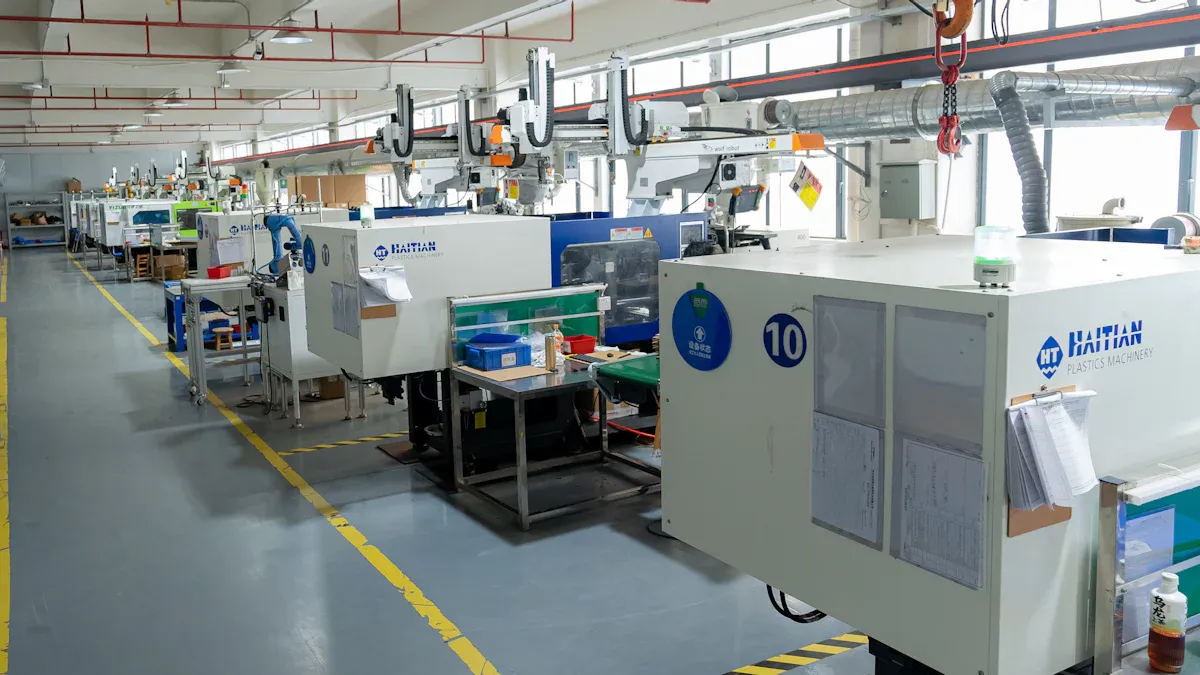
You might ask if injection molding works for your needs. This method makes many things you use daily, and it has several advantages of injection molding. It saves money, works fast, and utilizes a variety of materials. Reports indicate that plastics account for about 81% of what is used in this process. The market could reach USD 544,963.85 million by 2035, with the Asia Pacific region holding the largest share at 41%.
| Statistic | Value |
|---|---|
| Market Size in 2026 | USD 331,607.55 million |
| Projected Market Size by 2035 | USD 544,963.85 million |
| CAGR (2026-2035) | 5.6% |
| Global Consumption (2024) | Over 160 million metric tons |
| Plastics Usage | About 81% |
| Metals Usage | 11% |
| Rubber Usage | 6% |
| Other Materials Usage | 2% |
| Injection Molding’s Share | Almost 32% of all polymer manufacturing worldwide |
Key Takeaways
- Injection molding saves money when making many items. If you make more parts, each part costs less.
- This method is fast. It helps companies finish orders quickly. They can meet deadlines and make lots of products fast.
- Injection molding makes parts that look the same. This is good for products that need to be exact and match each other.
- You can design many shapes with this method. It lets you make hard shapes that other ways cannot do easily.
- Injection molding works well for making lots of items. But it is not good for small amounts or test samples. The starting cost is high.
Advantages of injection molding
Cost efficiency
Injection molding helps save money when making many parts. The first step costs a lot because you need special molds. But each part gets cheaper as you make more.
- If you make 250 to 500 parts, injection molding costs less than 3D printing or CNC machining.
- Making lots of parts spreads out the setup cost. This makes each item cheaper.
- You also save because you do not need to change the setup often.
Aspect Explanation Economies of Scale Making more parts lowers the cost for each one. Fixed costs get shared across many pieces. Initial Setup Costs High-volume production lets you split setup costs among many parts. This lowers the cost for each part.
Injection molding helps companies save a lot when they need thousands or millions of the same part.
High production speed
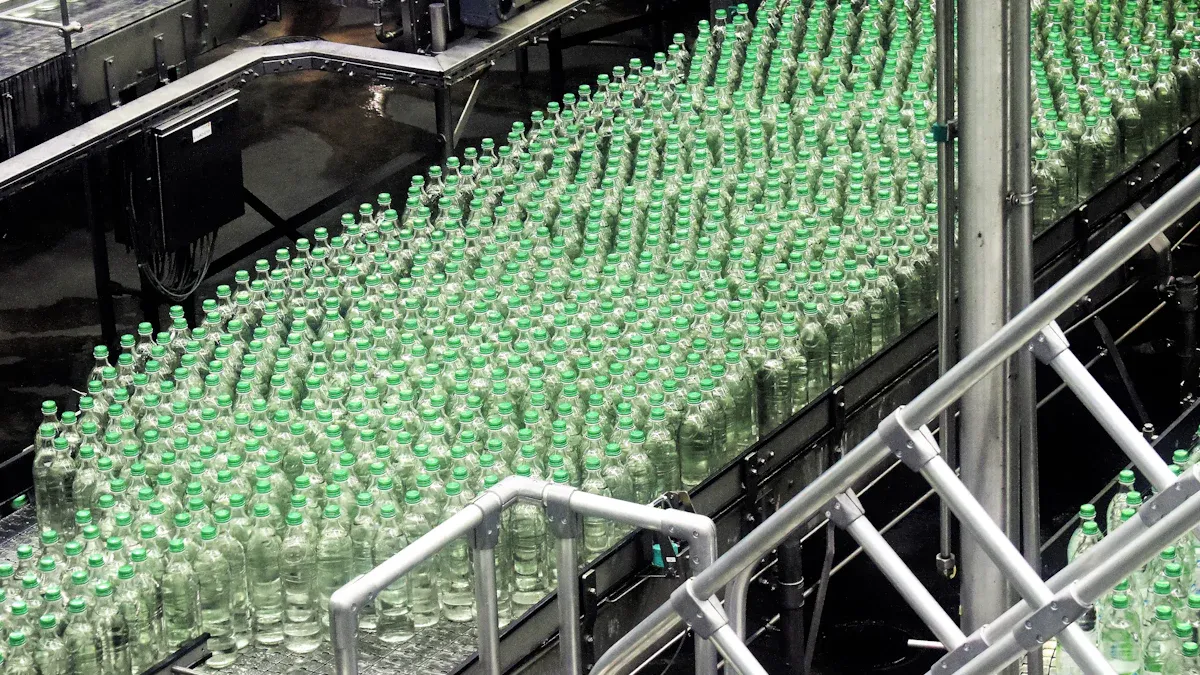
Injection molding is very fast. You can make parts in seconds or minutes. This is much quicker than other ways to make things.
- Multi-cavity molds let you make many parts at once. This can cut time by up to 80%.
- Robots and machines help keep the quality good and speed up work.
- Computers watch the process and help control how materials move and cool.
With injection molding, you can finish big orders quickly and meet tight deadlines.
Consistent quality
Injection molding makes parts that are almost always the same.
You need to set clear rules for quality before you can check it. These rules should match what customers want and what the law says.
Manufacturers use special steps to stop mistakes.
- Every project follows a plan so parts stay the same.
- Changes are written down so you can track them.
- Careful control of fill, pack, and hold steps makes sure every part is right.
Tests like checking moisture and strength help keep standards high. Injection molding means you get parts that fit and work every time.
Material versatility
Injection molding lets you pick from many materials.
| Material Type | Characteristics |
|---|---|
| High-density Polyethylene (HDPE) | Strong, tough, and resists chemicals. Used for packaging and industrial parts. |
| Polypropylene (PP) | Tough and hard to break. Used for lids and medical tubes. |
You can use thermoplastics, thermosetting plastics, or mix materials in one mold.
- You can make parts strong or flexible, depending on what you need.
- You can use recycled or bio-based plastics to help the environment.
Injection molding lets you create new products that meet strict rules.
Design flexibility
Injection molding lets you design many different shapes.
- You can make thin walls, small details, and features like clips, hinges, bosses, and logos.
- Overmolding and insert molding add special features without extra steps.
Smart cooling and heating help you meet tough design needs. Injection molding lets you make parts that are hard to create with other methods.
Lightweight parts
Injection molding makes light parts for cars and planes.
It helps lower the weight of airplanes, combine parts, and make precise pieces.
You can make thin walls and special shapes that use less material but stay strong.
Saving weight is very important for airplanes. Every gram saved helps fuel use and performance.
This method makes complex plastic parts with little waste. It saves money and makes parts stronger.
Injection molding helps you make strong, light parts that work better.
Impact and corrosion resistance
Injection molding gives you parts that can handle hits and do not rust.
| Material | Impact Resistance | Corrosion Resistance |
|---|---|---|
| ABS | High | Good |
| Polycarbonate | Very High | Moderate |
| Nylon | High | High |
- ABS does not get damaged by chemicals and is easy to finish.
- Polycarbonate is very strong and can handle heat.
- Nylon is strong and does not get damaged by chemicals.
Additives can make parts even better, like helping them stand heat or fire. Injection molding helps your products last longer in tough places.
Heat resistance
Injection molding lets you use plastics that can take high heat.
| Parameter | Description |
|---|---|
| Melting Point | The temperature when plastic turns to liquid. |
| Heat Deflection Temperature | Shows how well plastic stays stiff when hot. |
| Continuous Operating Temperature | The highest safe temperature for long use. |
| Glass Transition Temperature | The temperature when plastic gets brittle. |
Plastics like ABS, polycarbonate, and nylon can handle tough heat.
| Material Type | Continuous Service Temperature (CST) | Short Burst Temperature Resistance |
|---|---|---|
| High-Grade Plastics | High | Very High |
You can use these parts in cars and electronics where heat matters. Injection molding helps parts work well in hot places.
Minimal finishing required
Injection molding makes parts that need little extra work.
- Most parts come out ready to use.
- You do not need much post-processing, so you can ship faster.
Design Strategy Impact on Production Time Impact on Cost Reduced Wall Thickness Cools faster Uses less material Elimination of Features Makes manufacturing easier Lowers tooling cost
Simple designs and making more parts help save money. Injection molding lets you work quickly and get products out fast.
Scalability
Injection molding is great for making lots of parts.
You can make thousands or millions of the same part and they all match.
- Multi-cavity molds help you make more parts and keep quality high.
- Machines and smart designs let you change things easily.
Fast cycles and little need for workers make it easy to make more. Injection molding helps you grow and meet what the market wants.
Limitations of injection molding
High initial tooling cost
You will face high upfront costs when you choose injection molding. The price for making a mold can range from $3,000 to over $100,000. The cost depends on how complex your part is and how many you want to make. If you need to change the mold during prototyping, you might spend an extra $5,000 to $50,000. These costs often do not show up in early estimates, so you may pay more than you expect.
- Tooling costs for injection molding are much higher than for other methods.
- Startups and small businesses often struggle with these expenses, especially if they use steel molds.
- If you make only a few parts, you cannot spread out the cost, so each part becomes expensive.
Note: Injection molding needs a big investment at the start, but the cost per part drops a lot when you make many parts.
Not ideal for low volumes
Injection molding works best for large orders. If you only need a small number of parts, this method may not save you money. The minimum number of parts you should make is about 500. If you need fewer than 75,000 parts, other methods like 3D printing or CNC machining might work better.
| Feature | Injection Molding | Additive Manufacturing |
|---|---|---|
| Production Volume | High, best for mass production | Low, good for small batches |
| Speed | Fast after mold is ready | Slower, depends on design |
| Customization | Limited, needs new molds | High, easy to change designs |
You will see that injection molding is not the best choice for prototypes or custom parts. Additive manufacturing lets you change designs quickly and costs less for small runs.
Design constraints
You must follow strict rules when you design parts for injection molding. If you do not, you may get defects or pay more for changes. Some common design mistakes include uneven wall thickness, sharp corners, and not enough draft angles. You should keep walls the same thickness, use smooth curves, and add draft angles to help remove the part from the mold.
| Design Mistake | Recommendation |
|---|---|
| Inconsistent wall thickness | Keep walls uniform, 40–60% if changing thickness |
| Insufficient draft angles | Use at least 1° draft per side |
| Sharp corners | Add fillets (rounded edges) |
| Tight tolerances | Use ±0.1 mm unless needed |
| Undercuts | Avoid or use special mold parts |
You may also face limits on the size and shape of features. Complex parts need more expensive molds and longer setup times. If you want to change your design, you may need a new mold, which adds cost and time.
Mold lead time
You will wait several weeks before you get your first parts. Making a simple mold takes about 2 to 4 weeks. Complex molds can take 6 to 8 weeks or even longer. If you order molds from overseas, shipping can add more time.
| Mold Type | Lead Time (Weeks) | Notes |
|---|---|---|
| Simple mold | 2–4 | Faster if shop is not busy |
| Complex mold | 6–8 | More time for extra features |
| Production molds | 8–20 | Intricate designs, many cavities |
Factors like mold complexity, number of cavities, and surface finish needs can all increase the wait. If you need parts fast, injection molding may not fit your timeline.
Material compatibility limits
You cannot use every material with injection molding. Some plastics do not flow well or shrink too much. If you pick the wrong material, your part may warp or break. You must check if your chosen plastic matches the mold design and the part’s job.
- Some materials need high heat or special molds.
- Not all plastics work for every shape or thickness.
- If you want to use recycled or bio-based plastics, you may face more limits.
You should always test your material before starting full production.
Part size restrictions
Injection molding works best for small to medium parts. If your part is too large, the mold becomes heavy and hard to handle. Large molds cost more and take longer to make. You may also need special machines for big parts, which adds to the expense.
- Most injection molding machines have size and weight limits.
- Very large parts may need to be made in pieces and joined later.
If you need very big parts, you might want to look at other manufacturing methods.
Environmental impact
Injection molding uses energy, but it is often more efficient than other methods. Modern machines use better insulation and smart heating to save power. Electric machines use less energy than hydraulic ones. If you plan your production well, you can lower your energy use.
- Injection molding creates waste, such as scrap plastic and defective parts.
- You can reduce waste by reusing scrap and improving your process.
- High-volume runs are more sustainable because they use energy better and make less waste per part.
Tip: You can help the environment by choosing recycled materials and running your machines efficiently.
Choosing injection molding
When to use injection molding
You should choose injection molding when you need many identical parts. This method works best for high-volume production. If you want parts with tight tolerances and consistent quality, injection molding gives you reliable results. You can use this process for products that need strong, lightweight, or heat-resistant materials. Many industries use injection molding for items like bottle caps, car parts, and medical devices.
You should use injection molding if:
- You plan to make hundreds or thousands of parts.
- You want each part to look and perform the same.
- You need special features like thin walls or complex shapes.
- You want to lower the cost per part as you make more.
Tip: Injection molding helps you save money when you scale up production.
When to consider alternatives
You may want to look at other methods if you only need a few parts. For small batches or prototypes, 3D printing or CNC machining can work better. These methods let you change designs quickly and cost less for low volumes. If your part is very large or needs special materials, other processes may fit your needs.
Consider alternatives if:
- You need fewer than 500 parts.
- You want to test or change your design often.
- Your part is too big for standard machines.
- You need materials that do not work with injection molding.
| Method | Best For | Speed | Cost for Low Volume |
|---|---|---|---|
| Injection Molding | Mass production | Fast | High |
| 3D Printing | Prototypes, small runs | Moderate | Low |
| CNC Machining | Metal parts, custom work | Moderate | Moderate |
Key decision factors
You should think about these points before you choose injection molding:
- Production volume: Higher numbers lower the cost per part.
- Budget: You need to pay for molds upfront.
- Part design: Simple shapes cost less. Complex parts need special molds.
- Material needs: Check if your material works with injection molding.
- Timeline: Mold making takes time. Plan for lead times.
Note: Make a list of your needs and compare them with what injection molding offers. This helps you pick the right process for your project.
Injection molding makes parts quickly and keeps costs low. You can pick from many materials for your parts. But you must pay a lot at the start. There are also rules for how you design your parts.
- Choose injection molding if you need many parts that match.
- Pick other ways if you want only a few parts or change designs often.
Do you need help with your project? Talk to a manufacturing expert or ask for a price to begin.
FAQ
What is the minimum number of parts you should make with injection molding?
You should make at least 500 parts. This number helps you spread out the cost of the mold. For smaller batches, other methods like 3D printing may save you money.
Can you use recycled plastics in injection molding?
Yes, you can use recycled plastics. Many factories mix recycled material with new plastic. This helps lower costs and reduces waste.
How long does it take to get your first parts?
You usually wait 2 to 8 weeks for your first parts. The time depends on how complex your mold is. Simple molds take less time.
What industries use injection molding the most?
| Industry | Common Products |
|---|---|
| Automotive | Dashboards, bumpers |
| Medical | Syringes, housings |
| Consumer Goods | Toys, containers |
You see injection molding in many industries because it makes strong, repeatable parts.
