


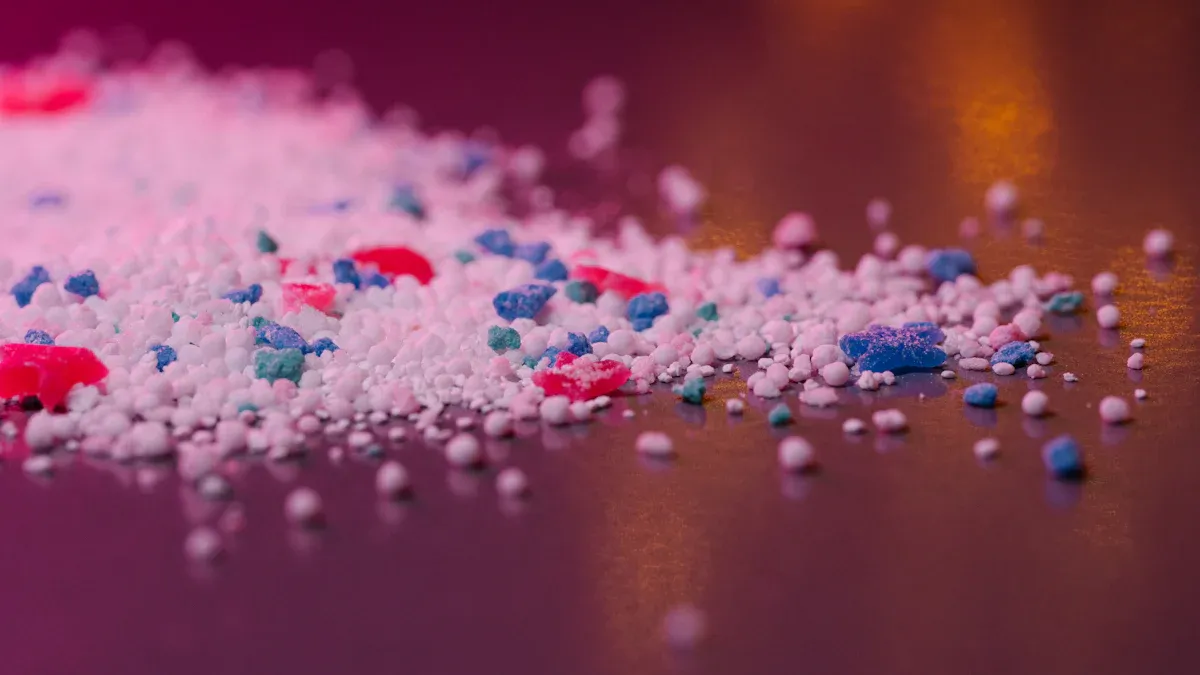
You may think polystyrene pellets are just for packaging, but they do a lot more. Their clear look lets you see through finished things. They can handle heat well when being shaped. They cost less than many other materials, so you can use them for many fun projects. Makers use polystyrene pellets for things in medicine, electronics, and art. These small pellets help turn ideas into real things every day.
Key Takeaways
- Polystyrene pellets can be used in many ways. They are found in medicine, electronics, and car parts. These pellets do not cost a lot. They help make good parts with less waste. Polystyrene is simple to shape. It works well for products with small details or tricky shapes. Recycling polystyrene pellets helps the planet. It cuts down on waste and keeps nature safe. Picking the right polystyrene is important. GPPS is clear, and HIPS is strong. This choice helps projects work out well.
Polystyrene Pellets Overview
Thermoplastic Properties
Polystyrene pellets are used in injection molding because they have special thermoplastic properties. These pellets get soft when you heat them and harden when they cool down. This makes it simple to shape them into many things. The glass transition temperature (Tg) is important for this process. When the temperature goes above Tg, polystyrene gets soft and you can mold it. Polystyrene has a higher melting point than plastics like polyethylene. It needs more heat to melt, but this helps make detailed molds. Polystyrene pellets do not react with many chemicals, including organic compounds and fatty foods. That is why people use them for food containers and packaging.
| Property | Description |
| Glass Transition Temperature (Tg) | Becomes soft and moldable above this temperature |
| Melt Flow Index | Low, gives good dimensional stability |
| Chemical Resistance | Resists organic compounds and fatty foods |
Types and Grades (Including HIPS)
There are different types of polystyrene pellets you can pick for your projects. The main types are General-Purpose Polystyrene (GPPS) and High-Impact Polystyrene (HIPS). GPPS is clear and breaks easily. You might use it for toys, cases, or trays. HIPS is stronger and does not break as easily. It is good for appliances and equipment. You can also add color or print on HIPS without trouble.
| Type/Grade | Properties | Applications |
| GPPS | Clear, brittle, less stable | Toys, cases, containers, trays |
| HIPS | Strong, opaque, easy to color or print | Appliances, equipment, signage |
- HIPS is tougher than GPPS.
- You can shape HIPS into more complex forms.
- HIPS is cheaper than many other plastics and is good for printing and painting.
Injection Molding Process
Polystyrene pellets can be made into products using injection molding. First, you need to design and make the mold. This step is very important because it shapes what you make.
The first thing you do in injection molding is design and build the mold. This step is not part of molding, but it is very important.
After the mold is ready, you do these steps:
- Melt the polystyrene pellets and inject them into the mold.
- Hold the melted material in place.
- Let it cool and harden.
- Take the finished part out of the mold.
Each step helps you get the right shape and quality. Polystyrene has a low melt flow index, so it fills the mold slowly. This helps you make detailed parts with little shrinking.
Surprising Uses
Medical and Lab Equipment
Polystyrene pellets are used in hospitals and labs. They help make many medical and lab tools. These tools need to be strong and safe. They are also easy to clean. You can find polystyrene in device covers, disposable containers, and tool handles. They are used for making new prototypes fast.
| Application Type | Benefit |
| Diagnostic device enclosures | Strong and easy to clean |
| Disposable medical containers | Simple to make |
| Sterilizable surgical instrument handles | Tough and safe for the body |
| Laboratory equipment components | Good for covers and cases |
| Custom medical prototypes and testing fixtures | Fast to make and work well |
Tip: Polystyrene pellets help keep medical tools safe and strong.
Electronics Housings
Many electronics have cases made from polystyrene pellets. These cases protect computers, TVs, and phones. They keep the inside parts safe from harm. The material stops electric shocks. It also keeps devices cool. Some clear screens and lenses use this plastic.
- GPPS is good for electronic cases.
- It protects sensitive parts inside.
- It keeps devices safe from heat.
- It is clear, so it works for screens.
- Polystyrene is used for circuit boards too.
Note: Polystyrene pellets help keep electronics safe and looking nice.
Automotive Parts
Car makers use polystyrene pellets for many car parts. These parts include door panels, dashboard trims, and bumpers. The parts are light, so cars use less gas. This helps the environment. Making these parts costs less money. The material is strong and can take heat.
- Door panels, trims, and bumpers use polystyrene pellets.
- The material is light and saves money.
- It can be shaped and stands up to heat.
| Feature | Impact on Automotive Components |
| Weight | Makes cars lighter and saves fuel |
| Cost Efficiency | Lowers costs for car makers |
| Transportation Costs | Light parts cost less to ship |
Did you know? Using polystyrene pellets in cars saves money and helps the planet.
Creative and Educational Products
Polystyrene pellets are used in art and school projects. Teachers and artists use them for models and kits. The pellets are easy to shape and color. Students use them for science and art projects. They are safe for classrooms.
- Easy to shape for art and learning.
- Safe for students to use.
- Bright colors make projects fun.
Try polystyrene pellets for your next school or art project!
Food Service Items
Polystyrene pellets help make food containers and cups. These items keep food safe and fresh. The material does not change the taste of food. It keeps water out and has been used for years. Some states have rules about using expanded polystyrene. Companies must follow recycling and safety laws.
| Food Service Items | Regulations |
| Takeout containers | Some states ban expanded polystyrene for food containers. |
| Disposable cups | Some laws require recycling a part of these cups |
| Attribute | Description |
| Inert Nature | Does not react with food. |
| Moisture Resistance | Keeps food dry and fresh. |
| FDA Approval | Safe for food use. |
| Long History of Use | Used for food for almost 50 years. |
| Hygiene in Critical Environments | Used in places where cleanliness is very important |
- Keeps food hot or cold
- Light and easy to carry
- Strong and hard to crush
- Absorbs shocks well
- Can be recycled
Remember: Polystyrene pellets help keep your food safe and fresh.
Benefits of Polystyrene Pellets
Cost and Efficiency
Polystyrene pellets help you save money and work faster. You can make thousands of parts every day with them. The process is quick, so jobs finish sooner. You use less material and need fewer workers. This means your costs go down. The table below shows how these pellets help you work better:
| Aspect | Description |
| Advanced Process Control | Uses smart technology for steady, precise results. |
| Real-time Monitoring | Adjusts settings to keep quality high and reduce waste. |
| Short Cycle Times | Lets you make many parts quickly. |
| Cost-effective Production | Cuts down on waste and labor, making each part cheaper. |
Tip: You get your money back fast because the process is efficient.
Design Flexibility
Polystyrene pellets let you make many different designs. You can create parts that are light and strong. These pellets help you mold tiny shapes and details. Other plastics cannot always do this. Here are some things you can make:
- Light parts that are easy to move
- Parts that do not get damaged by water
- Parts that do not break easily
- Shapes that stay the same over time
- Designs with sharp and tiny details
You can use these features for toys, medical tools, and car parts.
Clarity and Insulation
Polystyrene pellets make clear and tough products. General Purpose Polystyrene (GPPS) is very clear. You can use it for CD cases and makeup boxes. Expanded Polystyrene (EPS) keeps things hot or cold. It also blocks out noise. The table below shows what each type can do:
| Type of Polystyrene | Characteristics | Applications |
| GPPS | Clear, rigid, excellent clarity | CD cases, cutlery, cosmetic packaging |
| EPS | Expands, insulates well | Packaging, insulation boards, coolers |
Note: Low thermal conductivity helps keep heat in or out. This makes buildings and containers save energy.
Recyclability and Sustainability
Recycling polystyrene pellets helps the earth. Many countries recycle expanded polystyrene now. South Korea recycles 88% of its EPS. Taiwan recycles 83%. Recycling starts by sorting and pressing the material. This makes the waste much smaller. Companies use recycled products to save resources and keep nature clean.
- In 2023, 72 countries recycled expanded polystyrene.
- Some places recycle more than 30%.
- Sorting and pressing make recycling easier and better.
Remember: Recycling polystyrene pellets helps make the world cleaner and greener.
Choosing the Right Polystyrene Pellets
Application Considerations
When you select polystyrene pellets for injection molding, you need to think about how your product will be used. The function of your item matters. If you want a part that must handle heavy loads or impacts, polystyrene may not be the best choice. This material is easy to mold and saves money, but it can crack or shatter under stress. You should also look at the environment where your product will be used. Moisture, heat, and chemicals can affect how polystyrene performs.
Before you make a final decision, check if your material meets all rules and standards for your market. Some products need to follow strict safety or environmental laws. You also want to know how long your product should last. If you need something durable, pick a grade that matches your needs.
Here are some key points to help you decide:
- Think about what your product will do.
- Look at the conditions it will face, like temperature and moisture.
- Decide how long you want your product to last.
- Make sure your material follows all rules and standards.
- Balance cost with performance.
- Consider how recycling or sustainability fits your goals.
Tip: Always match the grade of polystyrene to your product’s needs. Different grades offer different levels of strength, clarity, and insulation.
Tips for Manufacturers and Designers
You can improve your results by following some best practices when working with polystyrene pellets. Start by choosing the right material for your design. Wall thickness plays a big role in strength and appearance. For polystyrene, a wall thickness between 0.889 mm and 3.81 mm works well. Many designers use 1.5-2.5 mm for most parts.
| Material | Recommended Wall Thickness |
| Polystyrene (PS) | 0.889 mm – 3.81 mm |
Add draft angles to your molds. This helps you remove parts easily after molding. Use ribs to make your parts stronger. Ribs should be 40-60% as thick as the main wall. These steps help you avoid problems like warping or breaking.
- Pick materials that fit your design.
- Choose the right wall thickness for strength.
- Add draft angles to help with part removal.
- Use ribs to make parts stronger.
Note: Careful planning and smart design choices help you get the best results with polystyrene pellets.
You have learned that polystyrene pellets help make many things. They are used for medical tools, car parts, and art supplies. Now, companies use recycled pellets because they are simple to store. These pellets work well in machines that already exist. You get products that last longer and follow new safety rules. Many companies want to make these materials better for the earth. Keep looking for new ways to use polystyrene pellets. You might be surprised by what comes next.
FAQ
What makes polystyrene pellets good for injection molding?
Polystyrene pellets are easy to shape. They melt fast and cool down quickly. This helps you make strong and clear parts. The material is cheaper than many other plastics. You can save money when you use it.
Can you recycle products made from polystyrene pellets?
Yes, many polystyrene products can be recycled. Some recycling centers take clean polystyrene. Recycling these items helps the earth.
Are polystyrene pellets safe for food containers?
Food-grade polystyrene pellets are safe for cups and containers. The FDA says they are okay for food contact. They do not change how your food tastes or smells.
How do you choose the right type of polystyrene pellet?
Tip: Think about what your project needs. Pick HIPS if you want strong parts. Choose GPPS if you want clear parts. Always match the pellet type to your project.
What are some creative uses for polystyrene pellets?
You can use polystyrene pellets for art and science projects. Teachers and artists like them because they are easy to shape and color.
