


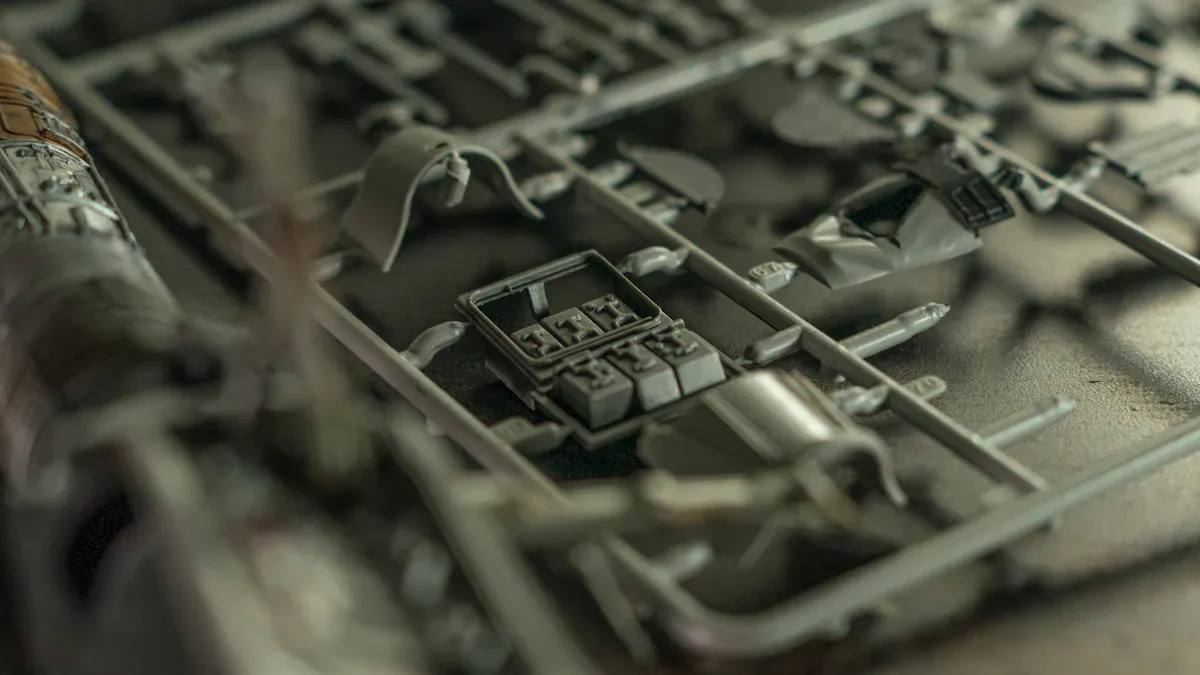
You will see Injection Molding makes parts faster and cheaper when you need many parts. It also gives the same results each time. If you want to change designs or make a few parts, 3D printing can save money and time. When you make more parts, molding gets much cheaper for each part. 3D printing is still good for samples and special items. When you pick a method, think about:
- Production volume
- Customization
- Lead time
- Required tolerances
- Quality
Key Takeaways
- Injection molding works well for making many parts. It makes lots of the same parts fast. The cost for each part goes down as you make more.
- 3D printing is good for making custom things. It lets you change designs quickly. You do not need to buy expensive molds.
- Think about how many items you need to make. Injection molding is better for big batches. 3D printing is better for small groups or special designs.
- The materials you can use are not the same. Injection molding has more strong materials to pick from. 3D printing has fewer choices but works well for some uses.
- Using both methods can save time and money. Make prototypes with 3D printing first. Then use injection molding for making lots of parts.
Quick Comparison
Key Metrics
When you look at injection molding and 3D printing, you should check some key metrics. These help you pick the best way to make your parts:
- On-Time Delivery to Commit: You want your parts to arrive when you need them. This shows how often you get your order on time.
- Manufacturing Cycle Time: This is how long it takes to make a part from start to finish. If the cycle time is short, you get your parts faster.
- Yield: This tells you how many parts are made right the first time. A high yield means less waste and fewer errors.
- Throughput: This is how many parts you can make in a set time. More throughput means you can make more parts quickly.
- Overall Equipment Effectiveness (OEE): This shows how well your machines work together. High OEE means your machines run well and make good parts.
Tip: Watch these metrics if you want to save money and finish on time.
Pros and Cons
You can see the biggest differences between injection molding and 3D printing in this table:
| Aspect | Injection Molding | 3D Printing |
|---|---|---|
| Scalability | Very scalable, good for making lots of parts | Not as scalable, needs more printers |
| Production Speed | Makes parts very fast | Parts take much longer to make |
| Material Variety | Many materials to choose from | Fewer materials, some limits with heat |
| Cost Efficiency | Cheaper per part when you make many | Costs more because of materials and machines |
| Startup Costs | Costs a lot at the start for molds and setup | Cheaper to start, no molds needed |
| Lead Time | Takes longer to set up tools | Fast to make changes and test new ideas |
Injection molding lets you make lots of parts with the same quality. You also get many material choices and lower costs if you make many parts. But, you have to pay more at the start and wait longer to set up. 3D printing lets you change designs fast and start with less money, but each part costs more and you can’t use as many materials.
Injection Molding Overview
Process
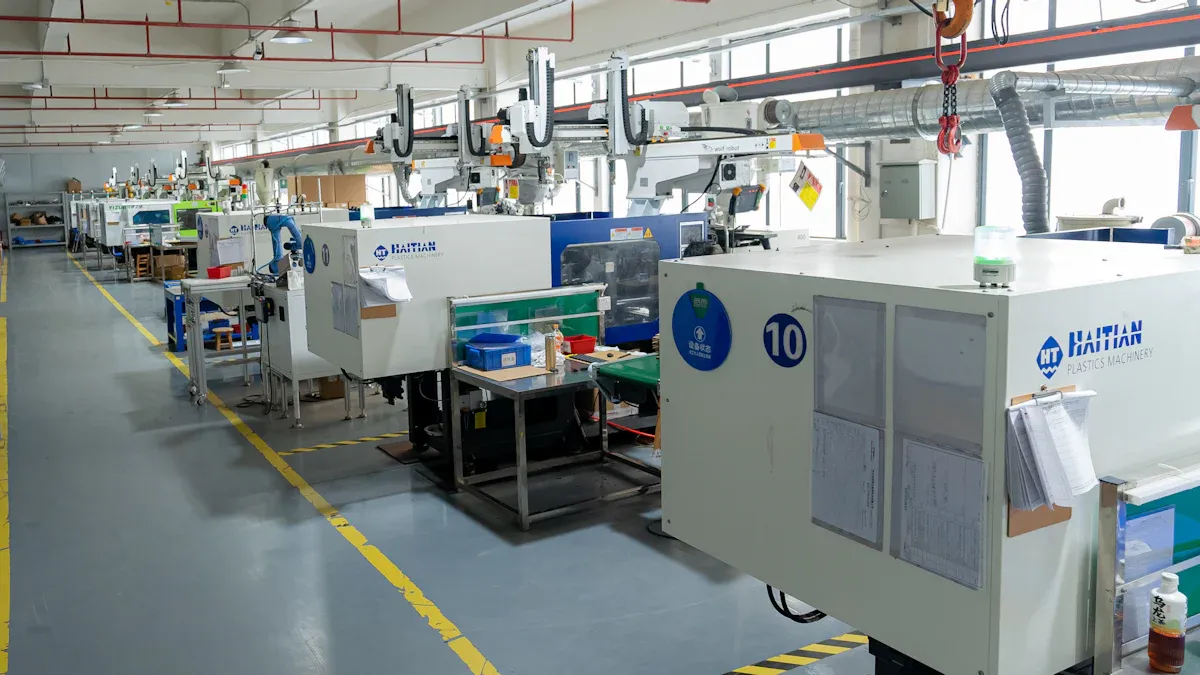
Injection molding helps make lots of plastic parts fast. The parts all look and work the same. The process has a few main steps to follow:
- Clamping: The machine pushes two metal plates together. This makes the mold shape.
- Injection: Melted plastic goes into the mold through a nozzle.
- Dwelling: The machine keeps pressure on the mold. This fills every space inside.
- Cooling: The plastic cools down and gets hard in the mold.
- Mold Opening: The machine opens the mold. Now you can take out the part.
- Ejection: The finished part pops out of the mold.
Tip: You can use tools like automated inspection systems and Statistical Process Control (SPC). These help check your parts for quality and keep things running well.
Applications
Injection molding is used in many industries. It can make both simple and hard products. Here is a table that shows where injection molding is used:
| Industry | Applications |
|---|---|
| Automotive | Bumpers, dashboard panels, headlamp housings, door trim panels |
| Food & Beverage | Packaging, containers, utensils |
| Consumer Products | Kitchen appliances, furniture, toys, hygiene products |
| Aerospace | Aircraft interior parts, seating systems, ventilation controls |
| Healthcare | Medical devices, diagnostic equipment, patient monitors |
You can find injection molding in cars, planes, kitchens, and hospitals. It is also used to make toys. This method is best when you need many of the same part. Every part will look and work the same way.
3D Printing Overview
Process
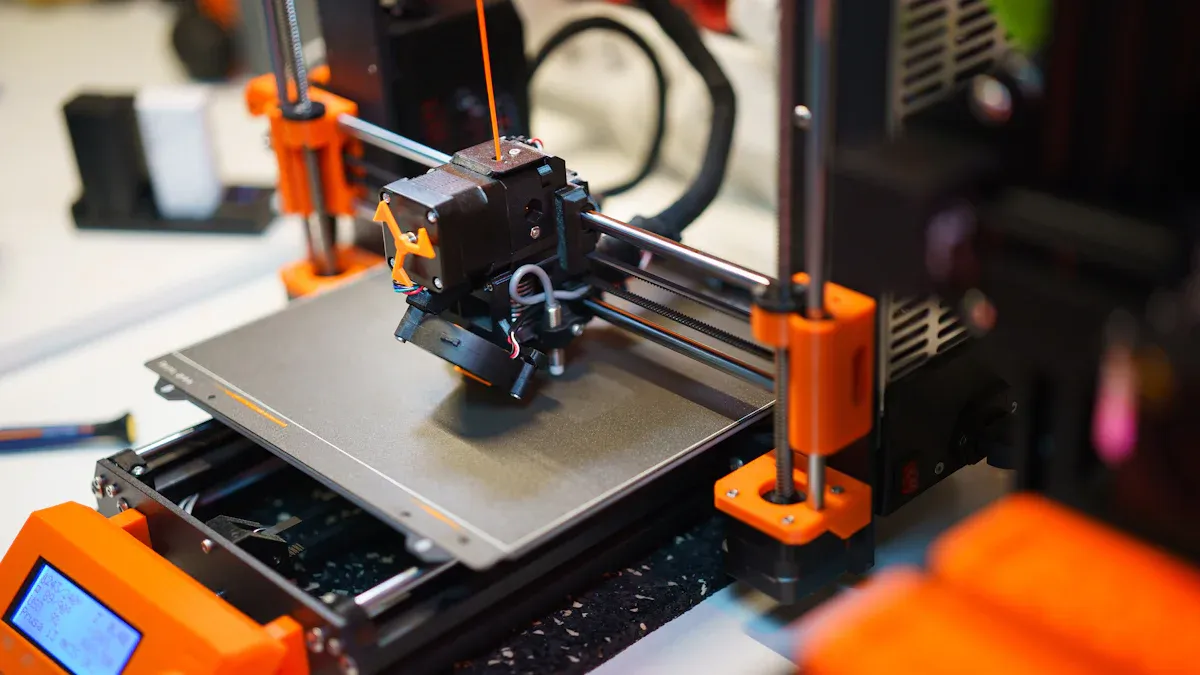
You can make parts with 3D printing by following a clear set of steps. This process lets you turn your ideas into real objects quickly. Here is how you do it:
- Design the 3D model. You start by creating a digital object using CAD software. Make sure your design is solid and ready for printing.
- Export and prepare the file. You save your model in a format like STL. Check the file for any mistakes before moving on.
- Slice the model. You use a slicer program to cut your model into thin layers. The slicer makes instructions for the printer, called G-code.
- Set up the printer. You load the right material and level the build platform. This step helps your print stick and come out well.
- Print the part. The printer builds your object layer by layer. You watch as your idea takes shape right in front of you.
- Post-processing. You clean up your part by removing supports or smoothing rough edges. Sometimes you cure the part to make it stronger.
- Inspection and application. You check your finished part to see if it meets your needs. If it looks good, you can use it for your project.
Tip: You can change your design and print new parts without waiting for new tools or molds. This makes 3D printing great for testing ideas and making custom items.
Applications
You can use 3D printing in many industries. It helps you make special parts, tools, and products that fit your needs. Here is a table that shows where 3D printing works best:
| Industry | Applications |
|---|---|
| Aerospace | Inspection tooling, lightweight parts, high precision components |
| Automotive | Tooling, fixtures, prototypes, parts that require stiffness and durability |
| Medical | Patient-specific implants, surgical planning models |
| Education and Research | 3D printers in classrooms and labs |
| Consumer Goods | Personalized products such as shoes and household items |
You see 3D printing in airplanes, cars, hospitals, schools, and homes. You can make custom tools for engineers, special implants for doctors, and even shoes that fit your feet perfectly. This method gives you freedom to create new things and solve problems in many fields.
Head-to-Head Comparison
Volume & Scalability
Think about how many parts you want. If you need thousands or millions, Injection Molding works best. It makes lots of parts fast and cheap. This method is great for mass production.
- Injection Molding makes many parts quickly.
- You save money when you make more parts. The cost for each part goes down.
- 3D printing works better for small batches. It gets slow and expensive if you need lots of parts.
- If you need more than 500 parts, Injection Molding is much cheaper.
If you want to make lots of parts, Injection Molding gives you the best deal.
Cost per Part
Cost matters when you pick a way to make things. Injection Molding costs a lot at first because you need molds and machines. After you pay for these, each part costs less as you make more. 3D printing costs less to start, but each part stays expensive, especially for big orders.
| Aspect | Injection Molding | 3D Printing |
|---|---|---|
| Startup Costs | High (molds, setup) | Low (no molds) |
| Cost per Part | Drops with volume | Stays high |
| Best For | Large batches | Small batches |
You save money with Injection Molding if you make lots of parts. For small runs, 3D printing can cost less.
Lead Time
Lead time means how long you wait for your parts. 3D printing is fast. You can get parts in about a week. Injection Molding takes longer because you need to make molds first.
| Production Method | Lead Time |
|---|---|
| 3D Printing | Fast, often ready in a week |
| Injection Molding | Takes longer for molds; simple molds in two weeks, hard molds take more time |
- 3D printing is good for quick changes and testing ideas.
- Injection Molding takes more time at first, but then makes parts very fast.
Pick 3D printing if you need parts soon or want to try new designs.
Design Flexibility
3D printing gives you more freedom. You can make tricky shapes and custom parts without extra tools. Injection Molding needs simple designs. You must think about how to get the part out of the mold.
- 3D printing lets you make cool designs and hard shapes.
- You can change your design and print new ones fast.
- Injection Molding limits what you can make because of mold rules.
3D printing is best for creative ideas and test parts.
Material Options
Injection Molding gives you lots of choices. You can use strong plastics, glass-filled, and fiber-filled materials. 3D printing has special materials like Digital ABS and Somos PerFORM, but not as many choices.
| Property | Digital ABS Plus | Somos PerFORM |
|---|---|---|
| Tensile strength | 55 – 60 MPa | 80 MPa |
| Tensile modulus | 2600 – 3000 MPa | 9800 MPa |
| Elongation at break | 25 – 40 % | 1.2 % |
| Flexural strength | 65 – 75 MPa | 146 MPa |
| Flexural modulus | 1700 – 2200 MPa | 9030 MPa |
| Izod impact (notched) | 90 – 115 J/m | 20 J/m |
| Hardness (shore D) | 85 – 87 | 93 |
| HDT (@ 0.46 MPa) | 92 – 95°C | 268°C |
| Glass Transition Temperature (Tg) | 47 – 53°C | 81°C |
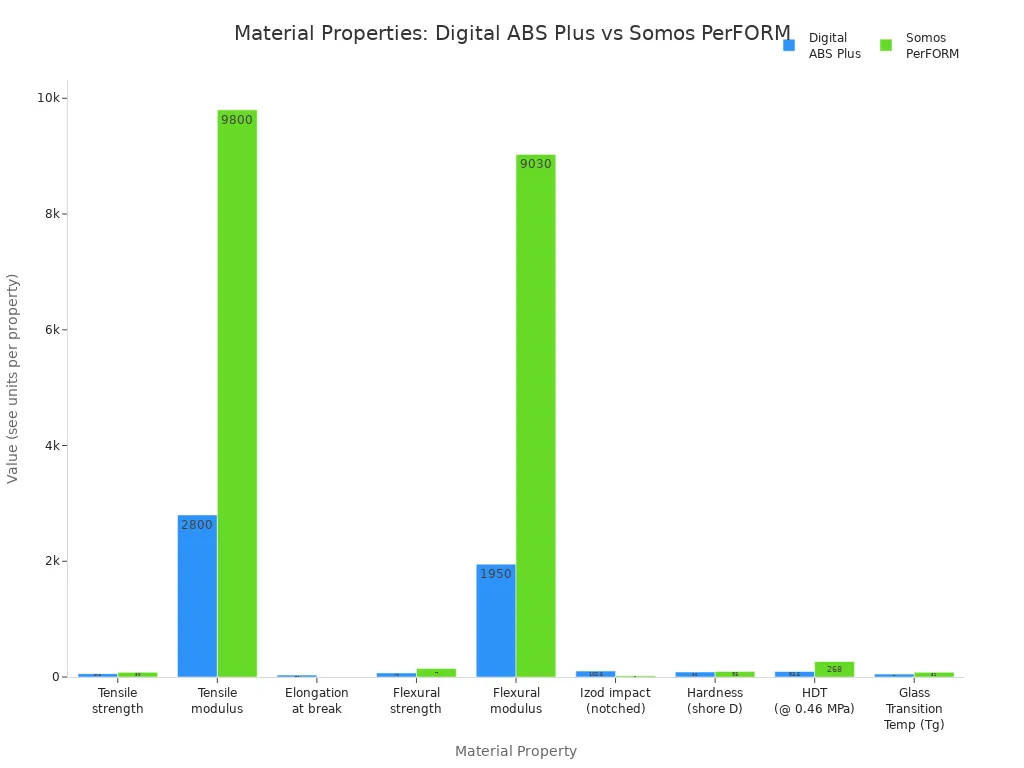
- Injection Molding works with more materials and makes stronger parts.
- 3D printing materials are good for test parts and special uses.
Part Quality
You want your parts to look nice and work well. Injection Molding makes smooth, strong parts with tight sizes. The parts are strong in every direction. 3D printing parts can be weaker because of how layers build up. You might need to fix the surface to make it smooth.
| Feature | Injection Molding | 3D Printing |
|---|---|---|
| Strength | Strong, even parts | Weaker parts because of layers |
| Surface Finish | Very smooth surfaces | May need extra work to look nice |
| Tolerances | Very tight sizes | Sizes can change, not always exact |
| Mechanical Properties | Same strength everywhere | Weaker along Z-axis |
| Applications | Cars, planes, medical devices | Test parts, small batches |
- Injection Molding makes parts with better finish and tighter sizes.
- 3D printing parts may need extra steps to look and feel right.
For strong, smooth, and exact parts, Injection Molding is the best choice.
When to Choose 3D Printing
Best Uses
You should choose 3D printing when you need flexibility and speed. This method works best for small batches, custom designs, or when you want to test ideas quickly. You do not need to pay for expensive molds or wait for long setup times. You can make changes to your design and print a new part in just a few hours.
Tip: 3D printing saves you money when you only need a few parts or a single prototype. You do not waste money on tools or molds.
Here are some situations where 3D printing is more cost-effective than injection molding:
- You need only one or a few parts, such as a prototype.
- You want to test a new idea before making many parts.
- The material or look of the part does not need to be perfect.
- You need a part with a complex shape that is hard to mold.
Many industries use 3D printing for these reasons. You can see how different fields benefit from this technology in the table below:
| Industry/Product | Example Description |
|---|---|
| Edible 3D-printing | Companies print chocolate, ice cream, cookie dough, and even hamburger patties. |
| Firearms | The first 3D-printed gun, the Liberator, started new talks about gun laws. |
| Manufacturing | Car and airplane makers print replacement parts, prototypes, and molds. |
| Musical instruments | Makers create violins and flutes, even holding concerts with 3D-printed bands. |
| Aerospace and Defense | Firms like Airbus and Boeing print strong, light parts to save fuel. |
| Automotive and Transportation | Ford and Tesla print parts and test ideas faster than before. |
| Consumer Goods | Gillette lets you design your own razor with 3D printing. |
You also see 3D printing in healthcare. Dentists print crowns, bridges, and clear aligners, so you get your dental work faster. Doctors use 3D printing for custom devices and prosthetics. The first FDA-approved 3D printed pill, Spritam®, shows how medicine can change with this technology.
3D printing gives you the power to create, test, and improve products without high costs or long waits. If you want to try new ideas or need special parts, this method is your best choice.
When to Choose Injection Molding
Best Uses
You should choose Injection Molding when you want to make a large number of parts that all look and work the same. This method works best for high-volume production. Once you create the mold, you can make thousands or even millions of parts quickly. The cost for each part drops as you make more, so you save money over time.
If you need to produce a lot of items, Injection Molding helps you scale up without raising costs for each unit.
Here are some situations where Injection Molding stands out:
- You need consistent part quality for every item.
- You want to keep costs low when making many parts.
- You plan to manufacture products for a long time.
- You require strong materials and smooth finishes.
You see Injection Molding used in many industries. These industries rely on this method because it gives them the best value and quality:
- Food, Beverage, and Agriculture: You find plastic parts in food preparation tools and farming equipment.
- Food Packaging: Companies use custom molds to make packaging for snacks, drinks, and other foods.
- Home and Appliance: Many household tools and appliances use molded plastic parts.
The table below shows why Injection Molding is the top choice for mass production:
| Reason | Why It Matters |
|---|---|
| High-volume output | You can make thousands of parts fast |
| Lower cost per part | Each part gets cheaper as you make more |
| Consistent quality | Every part meets the same standards |
| Material strength | Parts are strong and last a long time |
If you want to make products like food containers, kitchen tools, or home appliances, Injection Molding gives you the speed and quality you need. You get reliable results and save money when you produce in bulk.
Hybrid Methods
Combined Approach
You can get good results by using both 3D printing and injection molding. Many companies use 3D printing to make prototypes or special tools. This helps you test ideas fast and change them without spending much money. When your design works, you can switch to injection molding for making lots of parts. This way saves time and helps you avoid big mistakes.
- You can use 3D printing to make molds or inserts for injection molding. This is called Freeform Injection Molding (FIM). FIM lets you make finished parts without paying a lot for heavy tools.
- 3D printing gives you freedom to make tricky shapes and test them before making many parts.
- Using both methods lets you go from one prototype to thousands of finished parts with less risk.
Tip: Start with 3D printing to change designs quickly. Use injection molding when you need more parts and want lower costs for each part.
Manufacturers now use hybrid workflows to make products faster. You can print a prototype, test it, and then use 3D printing to make custom molds for injection molding. This helps you get products ready sooner and control your costs.
New trends make hybrid manufacturing even better:
- Additive manufacturing and injection molding work together to make products with more than one material.
- 3D printing helps you make tricky inserts for mold tools.
- AI-driven print optimization and digital manufacturing systems help you make better parts faster.
Trend Description Hybrid Materials Use new materials for stronger, cheaper parts. Complex Geometries Make shapes you cannot create with old methods. Rapid Prototyping Test ideas fast and change designs easily. Advancements in Material Science Use nanocomposites and smart materials for better performance.
You can use these hybrid methods to stay ahead in manufacturing. This way gives you more choices, speed, and better products.
You get the best results when you match your method to your needs. Injection molding works well for mass production. 3D printing helps with custom or small batches. To choose the right process, you can:
- Build a checklist for your manufacturing needs.
- Use prototyping to test and improve your designs.
- Talk with experts to review your options and meet market demands.
Think about your goals, budget, and design before you decide.
FAQ
What is the main advantage of injection molding for mass production?
Injection molding makes lots of parts very fast. Every part looks and works the same. The more parts you make, the cheaper each one gets. This is best if you need thousands of the same part.
When should you choose 3D printing instead of injection molding?
Pick 3D printing if you want only a few parts. It is good for testing ideas or making special shapes. You can change your design fast and do not pay a lot to start.
Can you use both methods in one project?
Yes, you can use both ways in one project. Start with 3D printing to make a sample. When your design is ready, use injection molding to make many parts.
How do material choices differ between the two methods?
Injection molding lets you pick from many strong and heat-safe materials. 3D printing has fewer choices, but you can still find some special ones for certain jobs.
Which method gives you better surface finish and tight tolerances?
| Method | Surface Finish | Tolerances |
|---|---|---|
| Injection Molding | Very smooth | Very precise |
| 3D Printing | Needs work | Less precise |
Injection molding makes parts smoother and more exact in size.
